Digital Courses
with smoove

Turn your knowledge into revenue

Create digital courses using e-learning, and share your expertise without limits of time or location. Grow your business with one platform to manage, market, and sell your courses – and deliver a complete learning experience, from signup to course completion, all in one place. 

מישהי מקליטה קורס
מישהי לומדת קורס מתוך טאבלט
מישהי עובדת על המחשב ויוצרת קורס דיגטלי

Everything your digital course needs

An intuitive All-in-One LMS

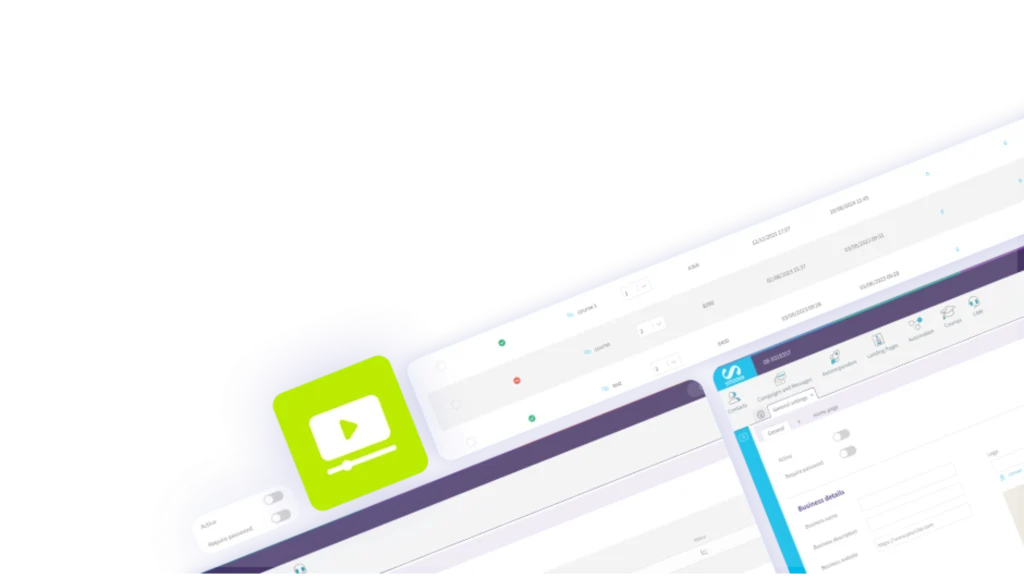
Create, market, and sell digital courses directly from the platform, without switching between tools or systems. Manage registration and payments seamlessly using landing pages, track performance data, and turn your knowledge into a profitable asset — quickly and easily.
Provide your students with a clear and engaging learning experience, with organized access to content across any device.

Help your students succeed
with a digital course

Advanced automation flows

Create, market, and sell digital courses directly from the platform, without switching between tools or systems. Manage registration and payments seamlessly using landing pages, track performance data, and turn your knowledge into a profitable asset — quickly and easily.
Provide your students with a clear and engaging learning experience, with organized access to content across any device.

מישהי לומדת קורס

Take control of your data and manage your course efficiently

Smart tools and full integration

Connect directly to payment providers, CRM systems, eCommerce platforms, and websites, and manage registration and payments in one place. Use ready-made templates and dedicated content blocks to design professional courses, and sync student and sales data with external systems via APIs and webhooks.

Keep your content
secure and protected

Content protection and smart access control

Ensure your content is accessible only to paying users, with password protection and IP-based access control. Control the release pace of lessons (drip content) to guide the learning journey, and protect your intellectual property in a secure environment.

דמות מצביעה על כניסה לקורס

Frequently asked questions about Courses

A digital course is a structured online learning experience. It’s ideal for creators, educators, and businesses that want to generate passive income and share their knowledge with a broader audience — without geographic limitations.

No. smoove makes it easy to build and manage courses with an intuitive interface for organizing content, lessons, and course structure, so you can focus on your content, not the technology.

You can upload a variety of content types, including text, images, videos (via links), PDF documents, and built-in surveys or quizzes. Everything is managed through a structured content portal that allows real-time editing and updates.

Yes. You can structure your course into modules and lessons, and release them gradually based on your preferred pace. This creates a clear and structured learning experience for your students.

Yes. smoove includes a full course sales infrastructure, including landing pages, payment integrations (checkout), and automation that sends access details immediately after purchase.

Once a user registers or completes payment, you can trigger an automated flow that sends login details, passwords, and reminders. You can also include emails, SMS, WhatsApp messages, and surveys throughout the learning journey at relevant points.

Absolutely. Courses are fully integrated with smoove’s marketing tools. You can send updates via email, SMS, and WhatsApp through automation, notify students about new lessons, or remind them to complete tasks.

smoove provides multiple layers of security, including password-protected access, IP-based identification, and the ability to limit the number of logins per user — ensuring your content is protected from unauthorized use or sharing.

I realized that this system offers an incredible saving—both in terms of money and managing users all in one place. I no longer need to use external systems, everything is managed in one place with easy access to the content.

Neta, Active Mode –
Business Tools for Website Builders

Learn More About Courses

The 7 Key Steps to Transition Your Business Online

In recent years, the need and importance of working online has become more apparent for many businesses. Companies, networks, and organizations have started developing digital products and services they didn’t offer before and have made the transition from physical to digital business models.

The idea is to create an online infrastructure for your business, whether it’s an online store for selling products, educational courses on an online portal, online therapy or consulting sessions, or professional content published on the web.

Why Move Your Business Online?

First of all, this doesn’t mean your business will stop operating offline. The goal is to create an additional infrastructure that works alongside your offline business.

That said, there are many benefits to being online, including:

  • Maximum Accessibility and Convenience: People can access your content, service, or product without leaving home.
  • Wider Reach: Even those who aren’t physically near you can access your services and products, including people living abroad.
  • Faster Distribution: It’s easy to reach a large audience in a relatively short amount of time.
  • Additional Source of Income: Online marketing leads to additional sales and revenue.
  • Saves Time: Communication with customers can be almost fully automated.
  • Works for You 24/7: Your business is open every day, all day. People can buy, consume content, and get value from you even when your store or office is closed.

How to Transition Your Business Online?

Here are 7 suggestions to help you make the move:

  1. Build a Responsive and Converting Website
    Your website is your business – it’s your business card, showcase, and doorway to new customers. It helps potential clients who don’t know you yet to find you and learn about your services. Many people search for professionals online today (and usually on their phones, so responsiveness is key). If you’re not online, you’re missing out on a significant buying power.

  2. Start a Blog
    Even if you don’t have a website yet, starting a blog will help establish you as an expert in your field. It allows you to consolidate various types of content (tutorials, professional articles, personal opinions, case studies, etc.), creating a valuable resource that will improve your Google search ranking. Plus, it will help you build a loyal readership. People who read your blog will learn about your industry and receive valuable content, strengthening your business reputation.

  3. Build an Audience and Gather Leads
    Create email lists of potential clients who are interested in what you have to offer and register via a form on your website or blog. This will allow you to keep their details and segment the audience based on different characteristics. Later on, this helps you continue and strengthen your connection with them through personalized, valuable content.

  4. Strengthen Relationships Through Email Marketing
    Once you’ve built an audience that has shown interest in your products or services, it’s important to continue delivering value to them. Update them, share new developments, give a behind-the-scenes look, and incorporate promotions and launches (without overdoing it, so it doesn’t feel like you’re always selling). Remember, the main goal is to provide value. Clients who feel valued are more likely to stay loyal and even promote you on their own.

  5. Marketing and Advertising
    While it’s great that customers promote your business, you can’t base your entire marketing strategy on that. In addition to content marketing (via blogs and email newsletters), it’s advisable to also promote your business on social media to reach a broader audience (after all, everyone’s there these days). You can do this yourself or with the help of professionals. Make sure to analyze where your target audience spends their time and focus on those platforms.

  6. Engagement on Social Media
    To get to know your audience better and help them get to know you, it’s important to be active on social media, not just to market and advertise. Share about your business on your personal profile, engage in groups to position yourself as an expert in your field, and show a strong presence to attract more followers and increase exposure.

  7. Data Analysis
    It’s important to continuously learn and improve. Extract data and statistics from your email campaigns and website traffic. This is the best way to understand what your audience is looking for, what interests them, how to communicate with them effectively, and if there are different audience segments that need tailored approaches. You’ll be surprised at how much this data can teach you about your business.

In Conclusion

It may feel like a lot of work, but it’s important to clarify that you don’t have to do everything all at once. You can start with the basics and gradually move forward. Every small step you take will help you gain momentum and progress in the right direction. Sometimes, just taking one small step is enough to get things rolling and cover great distances. We at Smoove are here with all the tools to help establish your business in the digital world and strengthen your connection with clients.

So, what’s the first step you plan to take in transitioning your business online?


Why You Should Create a Digital Course – 10 Reasons and a Bonus

Everyone is telling you that you should invest in creating a digital course? They’re probably right. Why should you be the only one benefiting from the knowledge in your head and the experience you’ve gained?

In recent years, remote learning has become more accessible and user-friendly. Many businesses now realize they should also use this platform to reach large audiences and share their knowledge. The idea is to package your expertise and content in a digital format (video/audio) and upload it to an online platform, where participants or members can access it with a login. You can also add live lessons, printable files, personal worksheets, and a forum for support and consultation.

So, aside from the fact that your audience should benefit from your knowledge, here are some other good reasons to develop a digital course. We’ve gathered 10 of them for you:

Why Your Business Needs a Digital Course

  1. Expand Your Impact
    Unlike one-on-one work, a digital course allows you to reach many more people. Some might not have been able to afford personal consultations, or your schedule may have been too full to fit in more meetings. An online course lets you reach these people, expanding your impact.

  2. Create a Stable Income
    Instead of chasing new clients every month, an online course or a subscription-based membership will provide a predictable, recurring income every month. In the meantime, you can focus on expanding your audience and spreading the course to more clients, thereby increasing your expected income.

  3. Increase Flexibility in Your Business
    Once you stop trading time for money, you gain full control over when, where, and what you work on. The flexibility and convenience are maximized.

  4. Upgrade Your Business and Automate It
    Packaging your knowledge into a digital course is a great way to get the most out of it and your skills. It gives you complete control over how you want the content delivered – whether live or self-paced – and automates a large part of your operations.
    The course progresses at each student’s pace, and you decide how involved you want to be (if at all). Some digital courses run completely on their own without the instructor’s involvement from start to finish.

  5. Create a Community
    On an online platform, participants also gain value from the community they’re learning with. It’s important to create a space for them to consult and share experiences with other business owners, fostering discussions that contribute to their success. Ultimately, this interaction will get people talking about your business and recommending it to others, bringing in more new clients.

  6. Reach Clients Worldwide
    No more physical location limitations – you can share your knowledge worldwide, even with people who couldn’t access it before. Beyond increased exposure, this opens up the opportunity to connect with professionals and clients from different countries, which may lead to exciting international opportunities.

  7. Clients Always Get You at Your Best
    All your knowledge is organized and presented perfectly, with the most relevant material for each lesson delivered in the ideal format. There are no distractions or interruptions. You can also incorporate live lessons to present yourself authentically and interact with participants.

  8. Create Income That’s Not Time-Dependent
    The lessons are pre-recorded, the content is uploaded to the platform, and the course continues to run while you’re sleeping or on vacation. It works for you even when you’re not actively involved.

  9. Brand Yourself as an Expert
    Once you reach a large number of clients and your course gets more exposure, people will start talking about you, recognizing you, and branding you as an expert in your field.

  10. Convenient and Accessible
    You don’t have to coordinate classrooms, provide refreshments, or ensure a minimum number of participants. The initial investment is in creating the course and uploading the content to the platform. Once it’s online, it’s easy to replicate it for future sessions.

Still Not Sure? Wait, We Promised a Bonus (And We Keep Our Promises)

Bonus – Why Would Clients Buy Your Online Course?

We often hear business owners hesitate about creating digital courses, saying that they don’t think their clients would want to learn online. They’re used to in-person meetings and aren’t sure if clients will connect with the format.

For those of you who are still unsure – here’s why your clients will buy your online course:

  • They can learn on their own time and at their own pace, even combining it with work.
  • They can access content they might not have been able to get in person due to physical location.
  • The costs are lower than in-person courses or one-on-one sessions, and they’ll still achieve great results.
  • They can learn from anywhere they can focus (at home, outdoors, etc.) in a comfortable environment.
  • They get access to a new community, even from around the world, and receive support, brainstorming, and networking opportunities.
  • The schedule is flexible, allowing them to control how many lessons they take at a time.
  • It helps them progress in the time they currently have to invest in themselves and their growth.
  • They can revisit the material as many times as they like, with no limitations.
  • It improves their self-discipline and independent learning ability, which benefits them significantly.

Yes, creating content and packing it takes an investment, and you’ll need to organize materials on the appropriate platform, but there’s no doubt that a digital course offers plenty of benefits for both business owners and clients.

We hope you’re convinced and that soon we’ll all be able to enjoy your knowledge online. Good luck!


Behind the Scenes with smoove Users / Shimrit Binyamin – Photographer, Designer, and Website Developer

Meet Shimrit Binyamin – owner of “Home for Digital Visual Presence”. 

Why did you start working with smoove, what was the initial challenge or need?

I started working with smoove to maintain contact with my clients and share up-to-date content of websites built in the studio and other content.
Additionally, I wanted to send information, updates, and tips to clients for smartphone photography and visual marketing.
Later on, I needed a place to store my digital photography course, and when smoove introduced the option to host digital courses, I happily jumped on it.

How does smoove help you solve this challenge?

In two main areas:

Customer relations

To maintain contact with clients, I regularly send emails – once a week with different content, sharing tips and examples of new websites we’ve built in the studio. Every Saturday, I share photos taken by participants in my courses, and once a month, I send a newsletter with interviews, tips, and more.
Over time, my distribution list has grown, and there are more responses to the emails I send.

Digital photography online course

Today – my digital photography course is at smoove. Clients easily log in with a password to the portal and watch the course lessons.
I have the option to create beautiful pages in the system for the various course lessons, and the best part is that everything works automatically!

I create automation where there is perfect synchronization with the payment company, the client is billed and pays, and then the relevant lessons they purchased are immediately and automatically opened for them, and they receive an email with a password for login.

The interface is very convenient for both me and my clients.

What is your main activity in the system?

Sending emails and maintaining contact with clients, and a portal with courses for learning photography.

Is it easy to work with the system?

Easy and fun. And when something gets complicated – the smoove service team is unparalleled in the world!!! Patience, kindness, and availability. I’m in love with smoove, I enjoy working with this system so much, and I recommend it to all my clients.

*

And here are some cool examples of Shimrit’s use of the system:
Newsletter sample

Courses Portal 

Automation for the course members

Managing Digital Courses, Online Workshops, and Customers Club – All in One System

Meet Netta, the owner of Active Mode – Business Tools for Website developers.

As part of her business, she offers a variety of live and digital workshops on project management, conducts mastermind sessions for her club members, writes professional articles in her blog, and also manages the Facebook community of website developers.

Navigating the System: A Customer’s Journey

Netta’s journey with smoove can be described as a deep customer journey. Step by step, she discovers more tools in the system and incorporates them into the ongoing management of her business.

The initial ‘acquaintance’ came following the need to create distribution lists of workshop participants or new prospects, and she started with a basic subscription. From there, gradually, she continued to learn the tools, fell in love with the ability to extract statistics and data, and out of curiosity and self-investigation, she began working with automations as well.

After a period of work and with the natural development of the business, Netta understood that she also needed a platform for a digital course but postponed the task because she didn’t want to deal with development, building, and external integrations for smoove to synchronize data.

During one of her explorations in the system, she came across the course portal and realized that she found the solution she was looking for, and from there, the path to the first digital course was short.

Automations – A Marketing Channel That Signifies Significant Savings

Netta currently operates three main automation processes in her account:

  1. Automation for new club members – they receive a welcome email, a link to the portal with a username and password, and access to content. After a month, they also receive an email for scheduling an introductory call. At the same time, she receives a notification every time a new member joins the club.
  2. Automation for live workshop participants – they receive a registration confirmation email, reminders before the workshop, and a summary email after the workshop with an invitation to the club.
  3. Additional automation for purchasers of recorded workshops – including integration with the payment page.

And here’s how it looks in practice:

Live Workshops Automation

Customers Club Automation

Rerocrded Workshops Automation

We asked Netta for her recommendations for working with the system, According to Netta, following the work on the system, her thinking has developed into a place of “thinking of automation processes, and not just wanting to organize the chaos.”

In addition, she emphasizes that it is a significant saving in both time and money, thanks to the ability to automate processes she used to do manually. “Once I used to send emails manually, one by one, to each participant before and after each workshop, and then suddenly I discovered automation and realized how much it could save me.”

The beauty of the matter is that all this automated process also performs the marketing and conversion work for her: someone purchases a digital workshop, and later the automation invites them to the customers club, helping her turn a one-time customer into a recurring one, which is super significant for the business aspect.

Working with the Course Portal

Netta discovered the portal during one of the explorations in the system when she was looking for a platform to launch her first online course. At that moment, she realized, she has “an option for tremendous savings, both in money and in user management, all in one place with access to content.”

She launched the first course on the portal, even in its initial form, and she is very satisfied with both the outcome and the work on the interface itself.

As someone coming from the website building field, her course needs to meet high standards both in terms of content and in all aspects related to design and user experience she offers to her clients – who are also website developers.

Nettas Portal Login Screen

The Club Content Screen

A System That Encourages New Experiments

Netta does all the work on the system independently, and any feature she doesn’t know, she investigates thoroughly, and then tries to operate.

She defines the system as one that encourages intuitive learning and is very easy to operate, and of course, she relies on the tech support team for any question or complex problem she encounters.

Netta’s tips for working with smoove

so here are three valuable tips from someone who knows:

  • Don’t start working directly with automations; try sending emails first to understand what you want to say and at what stage, and after you understand that you have a recurring manual process, it will be much easier for you to turn it into an automated process. Create a manual customer journey that starts naturally, while working with the system, and only then turn it into an automation template. Once it happens naturally first, you’ll find it very enjoyable to turn it into a process because it will be very clear in your mind.

  • When building your course on the portal, emphasize a ‘clean’ user experience and give your users as clear content as possible – black on white. Use a white background in the portal design and add another color that matches your brand. Don’t overdo it. This way, you will maintain a professional and pleasant appearance.

  • Make use of the support team. The response is very quick and professional, and it’s a significant part of the system you are working with. Besides the fact that it allows me to trust the system, it also encourages one to experiment with as many tools as possible and not to be afraid to make mistakes because anyway, you have backup.

In conclusion

“I want you to add something else,” she asks, “my story shows that working on the system is suitable and efficient for all kinds of businesses, and you don’t have to be a huge organization with distribution lists of tens of thousands of users. My list may not be that big, and I currently only have a few hundred contacts, but I have a very good income from this project.”

The bottom line – even if you are a one-person or one-woman business, don’t be afraid to take advantage of all the tools the system offers you, try different options, use all the features simultaneously, and help your business grow automatically.

Good luck!

Feel free to open a free account in the system and try creating valuable content for your customers as well, by clicking on the link