AI Landing Page Generation

Create AI-Powered Landing Pages in Minutes

Turn leads into customers,
without writing a single line of code

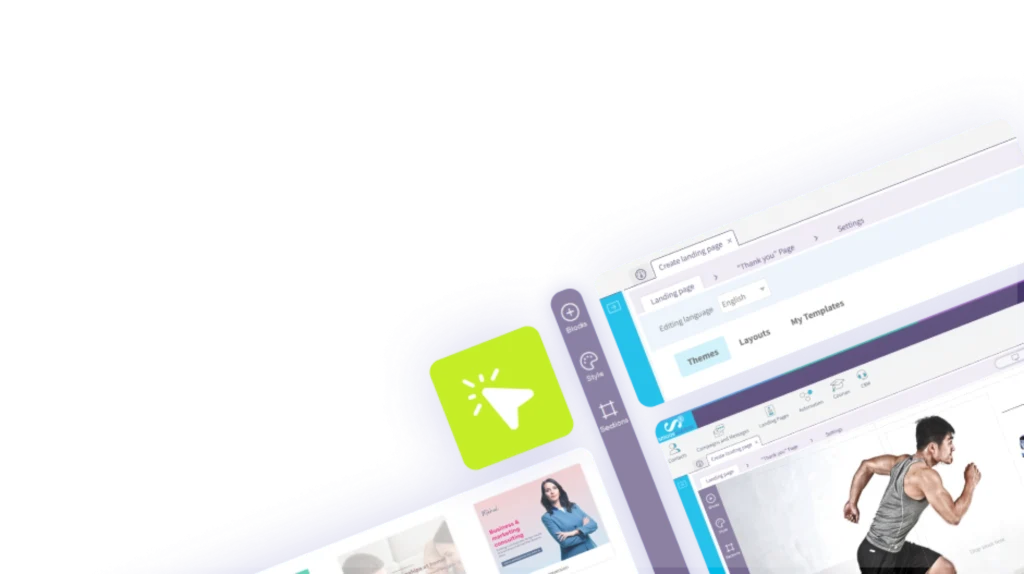
Build professional, beautifully designed landing pages using AI, ready-to-edit layouts, and an intuitive drag & drop editor. Add built-in payments and manage full customer journeys, turning leads into paying customers with marketing automation.

הדמיה של שימוש במערכת, ויצירה של עמוד נחיתה
מישהי גוללת בדף הנחיתה
יצירה של דף נחיתה

Save time and resources
on landing page creation

AI Studio and dozens of ready-to-use templates

Create stunning, professional landing pages with a mobile-first approach, quickly and effortlessly. Use the built-in AI assistant to generate page structure, copy, and initial design in just one click, alongside a gallery of conversion-focused templates tailored to any business goal. Want to refine your content? Improve and fine-tune your copy instantly with Magic Tweak.

Increase sales with
high-converting landing pages

Payments and integrations

Create stunning, professional landing pages with a mobile-first approach, quickly and effortlessly. Use the built-in AI assistant to generate page structure, copy, and initial design in just one click, alongside a gallery of conversion-focused templates tailored to any business goal. Want to refine your content? Improve and fine-tune your copy instantly with Magic Tweak.

אישה מופתעת מהקלות של יצירת דף נחיתה

Create beautiful
landing pages with ease

An intuitive no-code editor

Drag and drop smart content blocks for any need –  text, images, headlines, videos, products, blog posts, events, and more. The editor includes built-in conversion optimization (CRO) tools like call-to-action buttons (CTA) and smart lead capture forms.

Nurture leads with landing pages

Marketing automation and smart customer journeys

Build effective marketing funnels powered by personalization. Capture leads through your landing pages and guide them toward conversion with advanced automation flows that deliver the right message to each customer at the right moment.

Frequently asked questions about Landing Pages

A landing page is a focused page with a single clear goal such as sign-up, lead capture, or purchase. It’s ideal for any business that wants to drive action quickly and effectively without building a full website.

No. smoove is designed so anyone can build a landing page easily, using ready-made blocks, simple drag & drop editing, and pre-designed templates. Need help getting started? Our AI assistant can create and design your first page in just one click.

You can launch a landing page in just minutes. Choose a ready-made template or let AI generate one from scratch, customize your content and visuals – and publish.

Absolutely. Landing pages are fully connected to smoove’s marketing platform, including contact lists, automation flows, email campaigns, WhatsApp messaging, SMS, and more. All leads flow into one place and continue seamlessly through the journey.

Yes. With smoove, you can generate a complete landing page using AI in just a few steps. Provide a few basic details about your business and goals, and instantly get a page with structure, design, and tailored content, ready for editing and customization.

Yes. You can integrate payments directly into your landing page and collect payments securely. The platform supports multiple payment providers, including dedicated integrations through built-in blocks.

Yes. All pages are fully responsive and optimized for every screen. You can also make specific adjustments for mobile separately from desktop, ensuring a smooth user experience (UX).

You can track visits, form submissions, and conversions directly within the platform. Use these insights to continuously improve your page, based on real data, not guesswork.

All of our programs, courses, and events are promoted through informative landing pages that lead directly to registration and payment. Collecting user information helps us segment our audience and better understand their needs.

Maya Ravichia
Community and Digital Manager, Supersonas

Landing page gallery

Beautiful, ready-to-use landing page templates,
All that’s left is to add your content!

Learn More About Landing Pages

Marketing Funnel: How to Boost Your Business’s Marketing Performance

In today’s competitive business world, business owners and marketers are constantly searching for effective ways to enhance their marketing performance and increase sales. One of the most powerful tools at their disposal is the marketing funnel, a strategic roadmap that guides and focuses marketing efforts. What are its advantages, how does it work, and how can you create a successful funnel? Here’s everything you need to know.

What is a Marketing Funnel?

A marketing funnel is a model that describes the journey a potential customer goes through from the first exposure to a product or service until they take a desired action, typically making a purchase.

The term “funnel” serves as a visual analogy: the wide top represents the large target audience at the beginning of the process, and the narrower bottom symbolizes those customers who eventually take the desired action. The marketing funnel consists of several stages, with each stage requiring different marketing actions to move the customer forward. A deep understanding of the marketing funnel and effective strategies at each stage is the foundation for building a winning marketing process. The importance of the funnel lies in its ability to provide businesses with deep insights into customer behavior and identify strengths and weaknesses in the marketing process. By analyzing performance at each stage of the funnel, businesses can identify barriers, refine their marketing message, and tailor it to the specific needs of each target group.

The Top 5 Benefits of Using an Effective Marketing Funnel

Using a well-structured marketing funnel brings a host of important benefits to businesses. Here are the top five:

  1. Long-Term Revenue Growth: A well-designed marketing funnel enables businesses to build long-term relationships with customers. By providing value and personalization at every stage of the customer journey, businesses can cultivate customer loyalty and encourage repeat purchases.


  1. Saving Money and Time: A structured marketing funnel allows businesses to allocate their resources more wisely and efficiently. Understanding critical touchpoints and using effective strategies at each stage helps focus investment on the channels and tactics with the greatest impact.


  1. Opportunity to Reach New Customers: A well-planned marketing funnel attracts new customers and expands the business’s customer base. Through personalized strategies and compelling content, you can spark interest and turn prospects into actual customers. Additionally, nurturing a positive and consistent customer experience throughout the funnel encourages recommendations and referrals from existing customers, helping to increase the number of returning customers and significantly optimizing the process.


  1. Improved Customer Experience: A marketing funnel allows businesses to deliver a personalized and relevant experience to each customer. By understanding the unique needs and expectations of each customer, you can create focused and meaningful communication. Providing valuable content, addressing common questions, and solving customer challenges at every stage strengthens relationships and enhances satisfaction.


  1. Creating a Competitive Advantage: Using a marketing funnel allows businesses to differentiate themselves from competitors. By offering a unique experience, personalized messages, and value-added content, businesses can position themselves as experts in their field and build a strong brand. Such a competitive advantage attracts new customers, increases loyalty among existing customers, and enables businesses to charge higher prices for their products or services.

How Does a Marketing Funnel Work?

The marketing funnel is divided into different stages, each focusing on a specific task and defined marketing goals. The movement of potential customers down the funnel is influenced by marketing actions, with different strategies applied to drive them forward—from attracting attention and creating awareness in the initial stages to encouraging purchases and building loyalty in the more advanced stages. The success of a marketing funnel depends on the effective combination of various marketing methods, including content marketing, paid advertising, search engine optimization (SEO), social media marketing, and more. Additionally, the proper use of technological tools such as marketing automation or real-time behavior-based triggers can greatly enhance the effectiveness of the marketing funnel.

The 4 Main Stages

  1. Awareness: The first stage of the marketing funnel is creating awareness. The goal here is to reach as broad an audience as possible and introduce them to the brand, product, or service. Common methods at this stage include paid advertising, content marketing, public relations, and search engine optimization. The content at this stage should be general, informative, and easy to digest, aiming to capture the attention of a broad audience.


  1. Interest: After initial awareness is created, the next stage is generating interest. Here, the goal is to provide potential customers with more in-depth information about the value and benefits of the product or service. Educational content, tutorial videos, case studies, customer stories, and demonstrations are effective tools at this stage. The business should focus on solving the customer’s specific problems while highlighting the uniqueness and added value it offers.


  1. Decision: At the decision stage, potential customers are ready to consider making a purchase. The business needs to provide all the necessary information to help them make an informed decision, including detailed product specifications, service terms, customer reviews, FAQs, and return policies. Special offers, discounts, and free trials can provide additional incentives for action. At this stage, it’s important to address any potential objections and remove barriers to the customer’s purchase.


  1. Action: The final stage of the marketing funnel is the action itself—whether it’s making a purchase or another desired conversion. The goal here is to make the process as easy, convenient, and reliable as possible for the customer. An intuitive website design, a secure payment system, and excellent customer service are critical factors for success. After the purchase, it’s important to continue nurturing the relationship with the customer, providing support and encouraging repeat purchases and referrals.

Effective Tips for Creating a Successful Digital Marketing Funnel

To create a successful digital marketing funnel, focus on a few key areas for crafting customer-tailored content. First, it’s important to deeply understand your target audience—who your ideal customers are, what drives them, and what their specific challenges and needs are. Second, create diverse and high-quality content tailored to each stage of the marketing funnel. From informative blog posts and tutorial videos in the early stages to more detailed materials like guides and case studies in the later stages. Consistency in messaging and tone throughout the funnel is crucial, with adjustments made for different marketing channels. Additionally, incorporating clear and effective calls-to-action is critical to the success of the digital funnel. Calls-to-action should be specific, prominent, and persuasive, leading the customer to the desired conversion point. Through A/B testing and optimization, you can improve the performance of calls-to-action and increase conversion rates.

Conclusion

The marketing funnel is a powerful tool that allows businesses to maximize their marketing potential. By understanding the stages of the funnel, creating personalized content, and implementing data-driven strategies, businesses can attract new customers, enhance the customer experience, and increase revenue. In today’s competitive digital age, investing in a well-designed marketing funnel is essential for any business that wants to take itself a few steps forward and stand out in the marketplace.


How to Increase the Number of Returning Customers by More Than 7% with a Simple Process

You’re probably familiar with the term “cart abandonment.” Here’s an interesting fact:

Most successful e-commerce site owners manage to reduce the number of cart abandonments. Studies show that a simple email reminding customers about the items left in their cart can bring back 5 to 9% of those customers.

But

I discovered something interesting. After a lot of research into why customers abandon their carts, I found that there are a few main reasons:

  1. Price: The product we offer can be found on other sites, and price has an impact (for better or worse). If we think a customer only visits our site, we’re living in a dream world. Customers compare prices (think about yourself when booking a vacation package).
  2. Timing: The product is right, the price is fine, but not now / I’ll wait until the 10th of the month when I have more funds / I’ll wait for the end-of-season sale / for winter/summer/fall/spring… but not now, even though I want it!
  3. Stock/Inventory: The product is similar, but not exactly what I wanted / I have to compromise here / I’ll think again about whether I really want it or should wait for the real thing…

*

When I understood this, I decided to do a small experiment. Instead of sending a generic (well-written) email reminding customers that their product is waiting for them to complete their purchase, I created a simple survey asking “Why?” What stopped the customer from completing their purchase?

Based on each response (and surprisingly, 93% responded to the survey), I sent them a targeted email with content relevant to the issue they mentioned in the survey:

* Is the price too high? Here’s a discount code or an additional product at a special price!

* Not the right time to buy? Great, let us know when to remind you in the future!

* Not exactly what you were looking for? No problem! We’ll notify you as soon as new stock arrives.

* Not clear on the product or service benefits? No worries, we’ll be happy to explain!

I tried this trick on five different customers and saw an average increase of 7% (meaning some saw an increase from 9% to 16% in returning customers)

How to Implement This in smoove

  1. Create Custom Fields with Survey Questions:
    Start by setting up custom fields with the survey questions.
  1. Integrate with a Landing Page or Survey Page:
    Next, integrate these questions into a landing page or survey page.
  2.    Set Up Automation:
    When a cart abandonment trigger is detected, instead of sending the same generic email, send the customer a short survey with the questions mentioned above.

    When the customer responds, their answers are recorded in their contact profile, triggering the appropriate email tailored to their response – including a link back to complete their purchase. (Of course, some customers won’t respond to the survey, but those who do will provide you with valuable insights about your product or service, and some will continue the purchase process once they receive an appropriate response.)

Process 1

  1. Trigger – Cart abandonment. Set up your online store to update you whenever a customer abandons a cart.
  2. Action: Send an email with the above survey.

Process 2

  1. Trigger: Contact update. When a customer indicates the reason for not completing the purchase, the relevant personal field is updated, triggering automation.
  2. Condition: Contact status. Set conditions based on the various reasons in this field, checking what the customer indicated.
  3. Action: Send an email. Create an email for each reason with personalized content. When the customer meets a specific condition, the relevant email is sent to them.

Advanced Option

For more advanced users, create a single email with targeted content, where each section addresses a different reason. This is how it looks when defining the target:

This process will be shorter:

1.Trigger: Contact update. When a contact indicates one of the reasons, their personal field updates accordingly.

2. Action: Send an email. The targeted email is sent to everyone, displaying the relevant content for the reason they marked.

In Summary

This process will allow you to gather important information from your customers and bring them back to complete purchases, thereby increasing your store’s revenue. It’s a win-win, right?

Want more ideas for additional automated processes to implement in your online store? We’ve compiled six more for you in the attached article.

*Written by Yahav Yaler – CX expert and a member of our professional partners community

How to Turn a One-Time Customer into a Regular Customer

As business owners, you’re familiar with these types of customers. They might come through a campaign, hear a recommendation, receive your product or service as a gift, or redeem a coupon. Now that they know your product is good, they have the potential to become regular customers. So, how can automation help you (along with a few other tricks)?

Abandoned Customers are the customers who made one purchase but never returned. There are also the more complex cases—those who filled their shopping cart and then left the site. Both types of customers already know the product and have been convinced by a campaign, recommendation, or active search, yet they didn’t complete the purchase. Why does this happen? Research, mainly through surveys like this one by the American company Baymard, shows that the most common reason for cart abandonment (cited by 60% of respondents) is high additional costs such as taxes or shipping fees that significantly increase the final price. Other reasons include sites that only allow purchases through an active account, website glitches, lack of preferred payment methods, and more. Only 4% mentioned “credit card declined,” indicating that most visitors are capable of making a purchase if the conditions are favorable.

The Cart Abandoners Group

Before being business owners, you’re also consumers in a hyper-consumer world. You browse dozens of e-commerce sites daily, searching for your next purchase. You know that customers leaving a site despite having a full cart is not uncommon. But for your business, it’s less than ideal. Research has long tried to understand the reasons behind cart abandonment. We’re here for the solutions.

  1. It All Starts with a Pop-Up

It’s possible the abandonment wasn’t personal. Our world is full of distractions, and one might have caught the customer right before they filled in their credit card details. Therefore, we want to ensure every new visitor leaves their email address or mobile number and joins our mailing list. A sign-up pop-up should include a compelling offer, like a discount or free shipping on the first order (and no, a coupon code for the next purchase doesn’t count). This encourages purchase completion and allows us to follow up with the customer, even if they abandon their cart.

2. Now, Reminders

We have one customer, one email, a full cart, and zero purchases. The best approach is a gentle reminder. Send an initial email with a personal link to their abandoned cart, in a friendly tone, without guilt or pressure, highlighting the benefits of the product. Including a content piece, research, or professional information related to the product’s values and benefits can also help.

3. Tough Nuts to Crack

Some customers won’t respond to emails or empty their cart. The next email in our automation series can be dedicated to them. Include a direct link to the abandoned cart and an additional incentive (e.g., free shipping) to persuade even the stubborn ones. Don’t give up on them too quickly; you can also reach out via SMS or WhatsApp. Any message or content prepared for email can easily become a personalized smartphone campaign.

4. Last Tip from Us

Customers often abandon their cart due to frustration with the purchase process. Try to understand why. Is the registration process too long, with no option for guest checkout? Are the shipping costs too high, making the total price unreasonable? Is the website not mobile-friendly, making the browsing experience unpleasant? These questions can help identify the breaking point for customers on their way to a successful purchase.

The One-Time Customers Group

The one-time customers are those who visit the site, fill a cart, complete a purchase, and then disappear. Or do they?

There are various reasons for not returning after a purchase. While we’re here to provide solutions, you need to answer a few questions first:

  1. Do you have a consumable product? If so, how often is it needed?
  2. Do you have additional products to offer?
  3. What’s your primary sales model (product purchases, monthly subscriptions)?
  4. Are your customers satisfied?

The Right Email at the Right Time

You know best how long your products last and when customers might need a refill. With this knowledge, you can time an automatic email reminder just when the customer is likely running out. Besides email, a reinforcement SMS or even a WhatsApp message can keep you in their mind. For instance, one of our clients who owns a pet store sends WhatsApp reminders to customers based on their last purchase, prompting them to buy more pet food or replace a flea collar, keeping them in the customers’ minds.

We Have an Offer

It’s likely that a customer who bought from you once would be interested in more products. In our automation for occasional customers, we include an email suggesting additional products. The more accurate the suggestion, the more likely additional purchases will follow. For a customer who bought gluten-free products, offer more gluten-free items; for one who bought a towel set, suggest bed linens. You get the idea.

Hey, Become a Subscriber

If your business offers consumable products or services that fit a recurring model, offer monthly, annual, or whatever-frequency subscriptions. This secures regular income and a base of regular customers, reducing time-consuming tasks and letting you focus on what truly matters.

How Was It?

Hearing from first-time customers about their experience is always exciting. It confirms we’re on the right track and encourages continued excellent service and products. This quality control can be done in several ways, such as sending a survey, an automatic email/SMS/WhatsApp to customers after a reasonable time post-purchase. Opening a direct communication channel helps build and maintain a relationship, ensuring customer satisfaction.

How Do You Actually Do All This?

Here’s an example of a basic automation process that will help you welcome customers who have purchased from you once, allowing them to get to know you better and connect through value propositions and additional tips:

Define a Trigger – Joining a List
All customers will be added here after their first purchase.

Add an Action – Send Email
Send a brief introductory email with details about yourself and your business, and thank them for their purchase.

Add an Action – Delay
Set a waiting period before sending the next email in the series.

Add an Action – Send Email
After the defined waiting period, send an email to remind them that you’re here. Include an interesting tip or a customer story they can relate to or be inspired by.

Add an Action – Delay
Set another waiting period before sending the next email in the series.

Add an Action – Send Email
Send the next email in the series. This one should continue to build the relationship by providing value with an interesting article or important tip. You can also include a purchase offer or special deal for new customers.

*You can, of course, continue the series with additional emails, depending on your goal and the customer journey you’ve defined.*

The main idea of this process is to reinforce customers’ choice in you and provide real, personalized value based on the information you have. This way, they’ll know that you understand them and their needs, thereby strengthening their loyalty to your brand and to you.

By deepening your relationship with customers, you can incorporate relevant offers and incentives within the email series to maximize revenue from your existing and loyal customers.

And What About the Emails?

You can easily create these emails using our designed templates. Our system offers dozens of templates categorized by professional fields and special occasions. 

In Summary

By refining your approach to abandoned customers and correctly categorizing them to provide relevant responses that prompt action, you increase the chances of converting abandoners into buyers.

A short and simple customer journey that will simply bring in more money. Don’t miss out on it.

How to Create an Effective Landing Page? Here Are 10 Important Tips

Have you ever created a landing page that you were sure would be successful and bring you lots of new customers, but in reality, it didn’t happen? Or perhaps you’ve landed on someone else’s landing page and didn’t really stay to read it through to the end?

There are several factors that can significantly improve the success rates of your landing page and help you achieve results.

What do we mean by results?

Ultimately, landing pages are supposed to convert. That is, to succeed in turning potential leads into contacts, with whom you have contact information, and you can provide them with information, market services and products, and, of course, provide value.

So, we’ve gathered here 10 important principles that you should pay attention to when creating a landing page.

Ready? Here it comes –

10 Principles for Creating Effective Landing Pages


Defining the Page’s Purpose

Before you start, it’s important to define the purpose of the page – is it to inform your audience about something? To serve as a gateway to your website? To offer services or products? Or to convert leads into customers by leaving details in a form?

Along with defining the goals, you need to define the messages you want to convey through the page. This will help you focus and not scatter later in the content writing stage.

Once the goal and message are clear to you, it will be easier to organize the content and structure of the page accordingly, in a precise way that will help people connect with you.

Defining the Target Audience

After the purpose is clear, you need to define the target audience. This will affect the style and structure of the page, the content, the colors, and the images that will be incorporated into it. It is recommended to define your audience by age, status, occupation, and of course, the need you are addressing.
For example – parents of teenagers who want to communicate better with their children / college students on semester break looking for employment / independent business owners looking to improve their business marketing / older people renovating their homes and looking for design solutions, etc.

The more specific and accurate your defined audience is, the easier it will be for you to formulate messages that will make them connect and want to continue the relationship with you.


By the way, “everyone” is not a target audience ;), or at least not one that is precise and convenient for conversion.

Clean and Organized Design

True, it always sounds obvious and clear, but many times we are drawn to add-ons, colors, and a variety of options for images and gifs, and in practice, it creates unnecessary clutter and does not serve the purpose.

So, we just wanted to remind you that the appearance of the landing page significantly affects its effectiveness.

Based on the initial scan of the page and its appearance, people decide whether to stay on the page and continue scrolling, and whether to take action.

Bottom line, the design of the page has a significant part in conversion, so it’s recommended to pay attention to this issue.

Minimalism and Organized Structure

Continuing directly from the previous point, make sure to include all relevant information for conversion on the page, and not beyond.

Too much information can overwhelm and cause readers to miss the point. Your landing page should be clean, accessible, and the navigation in it should be convenient and clear for quick scanning.

We recommend emphasizing structured information, divided into points, simple phrasing that is easy to scan chronologically, and adding subheadings that will allow readers to understand what you’re talking about without necessarily reading the entire page.

Main Headline

The main headline of the page is like its first business card; it should attract the readers’ attention and make them want to continue reading. This can be done by appealing to emotions, addressing a specific need or challenge they are dealing with, or offering a relevant value proposition that you know people are looking for. Along with all the above, try to think of a cool copy that will make your main headline sound good and be unique and not boring or expected, this will make people curious and interested in you.
Here are some examples of main headlines from landing pages for webinars that worked well for us:

“The formula for creating selling messages” / “Who did you call junk? How to write a winning newsletter that won’t get lost among the sea of emails your customers receive” / “The secrets of getting into your customers inbox” / “Marketing writing is dead – it’s time for Talking writing” / “Creating effective landing pages that will do the job for you”.

Valuable Content

So, you’ve ensured a good appearance and organized structure of the page, attracted the audience with a unique main headline, now you need to ensure they keep reading and connect with your message. How do you do that? By providing valuable content that includes:

– An opening that addresses the need or challenge they are facing with

– Explanation and relevant information about the solution you are offering

– Some form of product or service warranty, with a description of an outcome

– Incorporation of examples/testimonials or recommendations

– It’s also recommended to add a paragraph that tells about you in a few lines, if the page is intended for an audience that may not necessarily know you.

Call to Action

In order to achieve the goal, there must be a clear call to action on the page. Define what you want people to do when they finish reading, what is the bottom line for you, and this will be the call to action. It’s important to start from the following basic assumption – people don’t know what you want them to do unless it’s clearly written to them. Don’t assume it’s clear to them, or they already understand on their own, is there something you want them to do? Write it in clear. You can scatter along the page several calls to action buttons, but not too many, so as not to feel too aggressive.

Mobile Friendly

Today, the majority of the audience read their content directly on mobile, so it’s important to ensure that the page is adapted for mobile browsing. There should be an option for mobile editing and design in most landing page interfaces. Here at smoove, the Landing Pages are responsive and mobile friendly, and you also have the option to create a smartphone campaign – which is a mobile-adapted landing page, and it’s very convenient to include it in SMS messages, knowing for sure that the link reaches the contacts directly on their mobile, thereby increasing the likelihood that they will open it.

Use of Images and Videos

Chances are you’ve already heard about this, but if not, we’ll tell you that the brain processes images much faster than written information, so it’s important to include large, high-quality images on the landing page. People respond much more easily to images. And if you’re up for it, it’s highly recommended to include a video on your page, as it allows people to experience something much more real, especially if it’s a demonstration and explanation of the use of a particular product.

Short and Precise Forms

Before asking people to fill out endless details in a form, put yourself in their shoes for a moment and think about how you would react in the same situation. Try not to overload with lengthy forms; people don’t like to provide too much information upfront, so only ask for essential data. Ultimately, the more fields there are, the higher the chance of abandonment. Typically, it’s easiest to fill in fields like name and email address. Phone number, and birth date details already decrease the likelihood of abandonment. You can request additional details later on, on the thank you page, or send them another form through automation after a few days to avoid overwhelming them.

In Summary

To ensure that your landing page is effective and yields results, it’s advisable to invest in advance planning and defining important details before starting to work, and strive to adhere to as many of the principles suggested here as possible.

Now it’s time to implement, and if you have cool landing pages that you’ve created and are working well for you, feel free to share the link with us so that other readers can also be impressed by your excellent work and get inspired.

And if you haven’t created a landing page yet, you’re welcome to open a free trial account in the system and start your journey towards results right now!

How to recruit new customers?

Discover the art of customer acquisition in modern marketing as we delve into various strategies and techniques. Join us in our upcoming article where we explore the diverse methods of attracting and converting leads.

If you’ve made your way here, chances are you’ve gained some experience in the business world, enough to understand the complexity of lead recruitment campaigns. It’s no secret that not every campaign succeeds, and even successful ones may not always deliver high-quality leads. Furthermore, not every quality lead guarantees a sale or a new customer. Throughout their careers, many business owners have faced disappointments from expensive campaigns that yielded minimal results, often due to the dishonesty of professionals involved. We recognize that this task can evoke strong emotions, and that’s completely understandable. With numerous advertising arenas and a plethora of data to consider in each campaign, achieving true accuracy can be challenging. Our purpose is to provide valuable tips and verified information in the hope of assisting you in making informed decisions.

Let’s start from the beginning: what is a Lead?

A lead refers to an individual who has shown interest in our product through various channels such as campaigns, exposure to our content, or other forms of communication. They willingly provide their contact details, including their name, phone number, and email, enabling us to establish further communication. In some instances, we may acquire additional information about the lead from the outset, enabling us to tailor the initial contact made by our sales team to better suit their preferences.

The quality of leads is an intriguing statistic that holds significant importance. Not every lead has the potential to convert into a customer, and achieving the ideal accuracy in lead conversion can be a complex endeavor. This is where the concept of Return on Investment (ROI) comes into play. Is it worthwhile to invest in acquiring every lead? The answer largely depends on the nature of your business, whether you provide services or sell products. If your business targets exclusive customers who are willing to pay a premium or stay loyal for extended periods, investing a substantial amount per lead may be justified. However, if your business relies on a large customer base, including occasional buyers (such as on an e-commerce platform), minimizing the cost per lead becomes crucial to maximize ROI. The benchmarks for lead investment differ across industries and between service-based and product-based businesses.

Another crucial factor to consider is the source of the lead, which is both significant and measurable. A lead originating directly from an interested individual who proactively provided their information on the website holds greater potential for quality. This type of lead represents a web user who actively conducted a search, arrived at the marketing website, and willingly transformed from an anonymous visitor into an identified lead. Similarly, leads generated from targeted campaigns may exhibit higher accuracy compared to purchasing generic lists of “leads” or other compilations of “potential customers” (which is a topic to explore in a separate article).

In today’s campaign interfaces, there are advanced segmentation options available that enhance accuracy. By segmenting target audiences, we can differentiate leads based on their behavior and source. For instance, a lead obtained through a customer signing up for a newsletter or to receive a specific product will exhibit different characteristics during a sales call compared to a lead generated through expressed interest following exposure to a campaign. It is crucial to measure the effectiveness of each lead source individually to determine the most impactful sources and allocate marketing resources accordingly. 

Now, let’s address the question of how to acquire these leads. 

How does a lead campaign work, in short?

Your website attracts potential leads, who are essentially internet users browsing through various platforms like campaigns, social networks, podcasts, and landing pages. When these individuals visit your website or other digital assets, they present an opportunity to capture their information by offering them something valuable in return. Surfers don’t readily provide their contact details without a compelling reason. This is where incentives come into play. Often, leads are enticed to share their information in exchange for benefits such as being contacted, receiving a discount coupon code, accessing a free guide, or obtaining a trial period for a product. At this point, they transition from being mere surfers to becoming leads – potential customers with whom you can engage and nurture a business relationship.


Now, we arrive at the pivotal step in the process – seizing the most crucial opportunity. When a surfer decides to share their contact information with you, it becomes paramount to make the most out of this interaction. It’s essential to keep in mind that there is no room for a second

chance when it comes to first impressions. The initial message the lead receives from you holds significant weight, as it shapes their perception of your brand and plays a pivotal role in whether the relationship progresses towards conversion as a customer or not.


Nurturing a personal relationship with these leads is crucial, and it can be achieved through the delivery of targeted and automated content such as newsletters, text messages, and reminders, based on the available data for each lead. By engaging in correct, consistent, and systematic efforts, you have the potential to convert a significant number of these leads into paying and active customers. In fact, with effective nurturing, you can cultivate a loyal customer base who will not only make repeat purchases but also become advocates for your brand, driving sustained business growth.

A lead campaign encompasses multiple components that operate at various stages.

Landing Page

The landing page serves as the designated web address where campaigns from across the web direct traffic. One key advantage of a landing page is its relative ease of creation, allowing for customization tailored to the specific content of each campaign. It proves to be a valuable asset for accumulating leads, even for small businesses that may not have a dedicated website. When creating a landing page, it is essential to present the essence of your product or service along with a clear and compelling call to action, prompting visitors to provide their details for follow-up. It’s advisable to have a single call to action on each landing page to avoid confusion. Tailor the form and its placement to encourage visitors to share their information. Remember that different visitors require varying amounts of information to make a decision. Therefore, consider placing the form in multiple locations on the page.

The system provides pre-designed templates for landing pages, organized by topics and

industries. You simply need to insert your content, publish the page, and start tracking the influx of leads. It streamlines the process, making lead generation more efficient and manageable.

Pop Up

If you have a substantial website that serves as the destination for all your leads, it is essential to implement pop-up notifications for each unique visitor, specifically targeting those who enter your website for the first time. Pop-ups, similar to landing pages, offer interested surfers the opportunity to leave their details and become leads. When setting up pop-ups, it’s important to define their timing and location within the surfer’s journey on your website. Consider them as a guest in your home – choose strategic points where they have acquired enough information about your product or service, as well as points where visitors tend to exit the site.
By strategically timing the appearance of the pop-up just before these key moments, you increase the likelihood of capturing their attention and obtaining their contact details.

Automated content

 Once you have obtained verified contact details, such as an email address and phone number, you can leverage this data to enhance the lead nurturing process and accelerate your sales promotion efforts. Automation plays a vital role in this regard, enabling you to strategically

plan the customer’s journey and the content they will receive from your end. With automation, you can dynamically update and personalize the content based on the lead’s behavior and the information you have about them. This level of automation empowers you to create a personalized experience for each lead, providing them with the immediate assurance that you are attentive to their needs and understand their requirements. By utilizing automation, you can

foster a sense of care and engagement throughout the lead’s journey, thereby increasing the chances of conversion and building a strong customer relationship. 

Furthermore, you have the flexibility to determine when to trigger an alert for a salesperson to contact the lead or when to seamlessly transition the lead to the purchasing stage on your website. However, it is crucial to recognize the power of customized and personalized content in achieving optimal results. That’s why it’s essential to gather additional information that can be relevant for tailoring your content effectively. This may include capturing details such as areas of interest, demographic information, personal preferences, and even understanding the lead’s buying cycles for products regularly purchased within specific periods, such as food products, cleaning supplies, or electrical appliances. 

Implementing measures to gather more data can prove fruitful. For instance, integrating a chatbot with new leads that poses relevant questions can help segment their interests. Monitoring newsletter clicks and encouraging lead participation in a customer club are additional effective strategies for gathering valuable information. By expanding your understanding of each lead, you can create highly targeted and personalized content that resonates with their specific

needs and preferences, enhancing the overall effectiveness of your lead nurturing efforts.

What are the practical steps to implement this automation process in practice?

Here’s an example of a fundamental automation process that can effectively welcome new customers, facilitate better acquaintance with your brand, and foster a connection through a compelling value proposition:

  1. Define a Trigger – Joining the List: When new customers join your customer list through various platforms like landing pages, forms, or purchases, they enter this stage of the automation process. 
  2. Action – Sending an Email: Automatically send a first email to everyone who joins the customer list. This email will provide intriguing details about your brand, product/service, relevant links to valuable information, and helpful tips in their field of interest. 
  3. Action – Waiting: Set a designated waiting period before the next email in the series is sent. This allows time for the customer to engage with the initial email and ensures a well-paced approach. 
  4. Action – Sending an Email: After the defined waiting period, send another email as a gentle reminder of your presence. This email can include another interesting tip, a relatable customer story, or inspirational content that resonates with them. 
  5. Action – Waiting: Set another waiting period to allow customers to absorb the content and engage with your brand before receiving the next email in the series. 
  6. Action – Sending an Email: Send the next email in the series, which focuses on deepening the acquaintance and providing further value. This can include an engaging article, an important tip, a special purchase offer, or exclusive benefits tailored specifically for new customers.

The core concept of this process is to enhance the customers’ decision to choose your brand by providing genuine and personalized value based on the information you have. This approach demonstrates your understanding of their needs and fosters loyalty to both the brand and you as an individual.
By consistently delivering valuable content and offers through the email series, you can deepen the relationship with your customers. Additionally, including benefits and exclusive offers in strategic points of the series encourages additional purchases, maximizing revenue from existing and loyal customers.

This ongoing communication and customer-centric approach solidify the bond between your brand and customers, fostering long-term loyalty and continued engagement. It showcases your commitment to meeting their needs and ensures that they see you as a trusted partner throughout their journey with your brand.

In conclusion

Recruiting new leads may seem like a daunting task, but it’s entirely achievable with the help of automation systems like the one offered by smoove. Our automation system empowers you to automate various processes, freeing up your time to focus on enhancing your content and tailoring campaigns to specific target audiences using real data. By implementing a streamlined and efficient work process, you can achieve remarkable results. When we say “excellent,” we mean experiencing conversion rate increases ranging from 9% to an impressive 67% for new leads.

These substantial improvements in conversion rates can have a significant impact on your business’s growth and success. With smoove’s automation system, you have the tools and capabilities to optimize your lead recruitment efforts, allowing you to scale your customer base and achieve exceptional results. Don’t miss out on the opportunity to unlock the full potential of your marketing campaigns and see your business thrive.

 Measuring your conversion ratio is an essential step in evaluating the effectiveness of your lead recruitment efforts. To calculate it, you divide the number of new customers you acquired in a given month by the number of leads you received during that same month. 

For instance, let’s consider the following scenario:

  • New customers who made a purchase this month: 35
  • New leads that arrived this month: 110 

To determine your conversion ratio, you would calculate it as follows: Conversion ratio = (35/110) * 100 = 31.8%

This means that your conversion ratio for this month is 31.8%. It indicates that approximately 31.8% of the leads you received successfully converted into paying customers.

However, it’s important to note that your focus shouldn’t solely be on acquiring new customers. Maintaining a connection with your existing customers is equally crucial. By nurturing relationships and staying in touch with them, you can foster customer loyalty and drive repeat business.
Remember, your existing customers have already demonstrated their interest and trust in your brand. Engaging with them through personalized communication, exclusive offers, and exceptional customer service will help ensure their continued satisfaction and long-term loyalty.

Lead Nurturing is a crucial aspect of any successful business

Just like how well-groomed appearances catch our attention, leads who are nurtured properly are more likely to convert into paying customers. To maintain a high conversion rate between the number of referrals and the number of new customers each month, it’s important to take small but consistent actions that ensure the cultivation and nourishment of the ingredients that form the foundation of a thriving business.

You poured your blood, sweat, and tears into establishing your business. You invest in it day and night, always striving for professionalism. You even make sure to keep the water jug at the entrance refreshed and send price offers on stylishly branded paper. You could say that you do these small things to nurture your business, to give it the extra care it needs to thrive and succeed.

But in this complex process – and it certainly can be complex – there is one vital aspect we mustn’t overlook: lead nurturing. We’ve already discussed how to generate leads and maintain a satisfactory ROI, but now we need to focus on what comes next. How will we present ourselves in the best possible light to every person who has chosen to turn from an anonymous surfer to an identified potential customer and given us their details? This is where cultivating our business comes in.

Every journey begins with a single step

At the heart of every compelling story lies a fundamental rule of creative writing: there are two types of death. Either the protagonist embarks on a journey, which becomes the focal point of the plot, or the story begins with the hero’s return from a journey, with the plot focusing on their experiences. We can adapt this rule to shed light on the lead nurturing process


Each lead that comes your way sets out on a journey towards becoming a customer.
This journey involves several stages, starting with the introduction and information gathering, followed by content adjustment, and ultimately, the perfect conversion leading to a purchase. From the outset, it’s essential to plan the journey with careful consideration, defining the objectives you hope to achieve and the resources you’re willing to dedicate. Determine when each stage will end and when you can move on to the next phase. With a well-planned journey, you can guide leads towards becoming loyal customers.

First step: Gathering Information and Providing Value to Your Customers

The first step in lead nurturing is to gather information from the customer that will help you tailor your content and provide them with personal value. This involves collecting relevant data such as personal and family situation, age or date of birth, city of residence, and more. However, it’s important to keep in mind that at the initial stage, customers may not be willing to share a lot of information. To overcome this, it’s crucial to present questions in stages, while demonstrating to the customer how providing their details will benefit them. This approach not only helps you gather valuable data, but also makes the customer feel valued and understood.

Second step: “Effective Audience Segmentation for Personalized Communication”

 At this stage, we can use the information collected in the first stage to refine our target audiences based on interests or other relevant criteria. With the help of Samob’s system, you can easily pre-define mailing lists for each audience, saving you time and effort.

A personalized approach to communication allows you to identify and tailor your messaging to each customer’s unique needs and interests. For example, if a customer has purchased sports shoes, they may be interested in receiving content related to physical activity. Similarly, a customer who has bought yoga equipment may respond well to special offers on exercise mats.

You can also leverage personalization to build trust and empathy with your customers. By showing that you understand their needs and preferences, you can establish a deeper connection with them. For instance, you can offer birthday discounts or send reminders to customers who purchased a box of protein powder, letting them know it’s time to restock.

Ultimately, personalization is key to delivering a positive customer experience and driving conversions. By providing relevant and timely messaging, you can demonstrate the value of your products or services and build long-term loyalty with your audience.

Here are some examples of data that can be collected to provide personalized value across various fields of activity: 

  1. Parenting guides – Collect information on the ages of the children in order to send relevant information and tips on how to behave at home based on the child’s stage of development.

    2. Fashion chains – Determine whether to send equal offers and sales on women’s, men’s, or children’s clothing based on the customer’s preferences. In addition, identify the customer’s location and offer promotions or invitations to events in their relevant branch.

    3. Business consulting / digital marketing – Classify customers as self-employed, companies, solo business owners, or part of a department or organization, and determine their fields of activity in order to tailor value propositions and tips to their specific needs.

    4. Interior design – Identify if customers are renovating an existing home, building a new home, or are interested in design and home styling, and send them customer stories, planning tips, or inspiration based on their field of interest.

    5. Bed and Breakfasts / hotels – Determine if customers are interested in couple getaways, family vacations, or solo travel, and offer them tailored content that will market the accommodation according to their specific needs.

    6. Scuba diving equipment – Collect information on the type of diving the customer plans to do and recommend suitable equipment accordingly. Additionally, classify the audience by location and send relevant promotions for local diving spots.

    7. Cosmetics and care – Identify the age of the customer and send tips and suggestions for purchasing suitable products based on their skin type (anti-aging, acne, age spots, etc.).

    8. Travel advisors – Ask customers about their preferred style of travel (couple, family, solo) and whether they are interested in vacations, urban travel or adventure travel, and send them relevant offers and articles tailored to their interests.

Third step: level up

As previously mentioned, it’s crucial to establish the endpoint of our lead nurturing process. It’s important to note that the endpoint doesn’t necessarily have to be a purchase; it can also be a successful communication with the lead that prepares them for a sales call or providing them with a coupon or benefit, such as filling out a questionnaire and receiving the results via email. The endpoint should occur once we’ve exhausted all means of cultivating the lead from our end. This means providing them with the necessary information and engaging with them to the point where we feel it’s appropriate to take the next step.
To better understand how this process works in practice, we’ve provided an example of a basic automation process for lead nurturing. This process can be generated in the system and can significantly increase the likelihood of a purchase, using the example of a lead interested in yoga.

To effectively cultivate leads, it’s important to define the end goal of the journey. This could be a purchase or a different action that indicates a willingness to engage with the business. The end of the journey can also be marked by a coupon or benefit offered to the customer. It’s important to exhaust the lead from the business’s perspective before moving on to the next stage. 

To give an example, let’s look at a basic automation process for cultivating leads, based on a yoga business:

  1. Trigger: Joining the list. Relevant leads will automatically join and provide their details.
  2. Action: Send an email. A thank you email will be sent with interesting details about the business, valuable content, and a purchase offer.
  3. Action: Wait for three days before proceeding to the next step.
  4. Condition: Check the list status to see if a purchase has been made. Customers who purchase a product or service will be added to the list of purchasing customers.
  5. Action: Send another email with training tips, inspiration, and an offer to purchase yoga equipment to those who have not made a purchase.
  6. Action: Wait for three more days.
  7. Condition: Check the list status again to see if a purchase has been made.
  8. Action: Send another email with relevant content, such as an instructional video for home training, recommendations for training clothes, and a special discount for equipment.
  9. Action: Wait for three more days.
  10. Condition: Check the list status again to see if a purchase has been made.
  11. Condition: Check the email status to see if the customer has opened the email and showed interest.
  12. Action: Add interested customers who have not made a purchase to a separate list for future sales calls, surveys, or other personal customer journeys.

This process will increase the chances of a purchase and help businesses effectively cultivate leads.

In summary

Lead cultivation is a fundamental aspect of any successful business and a reliable way to provide personalized and relevant content to every lead while collecting valuable data that will improve your customer service. Our system offers several basic automation templates for lead cultivation. Feel free to experiment with them through our user-friendly interface and embark on a journey with your potential customers. It’s an exciting opportunity to expand your customer base and engage with your audience on a deeper level.