Marketing Automation
with smoove

Work smarter – and more efficiently

Create automated customer journeys in an intuitive and professional way. Build personal relationships with every customer using marketing automation, and save valuable time on repetitive manual tasks across your business.

תוצאה של האוטמציה, קבלה של דיוור אוטמטי ביום הולדת של הלקוח
הדמייה של אוטמציה במערכת סמוב

Create powerful automation flows easily and effortlessly

An intuitive, no-code workflow builder

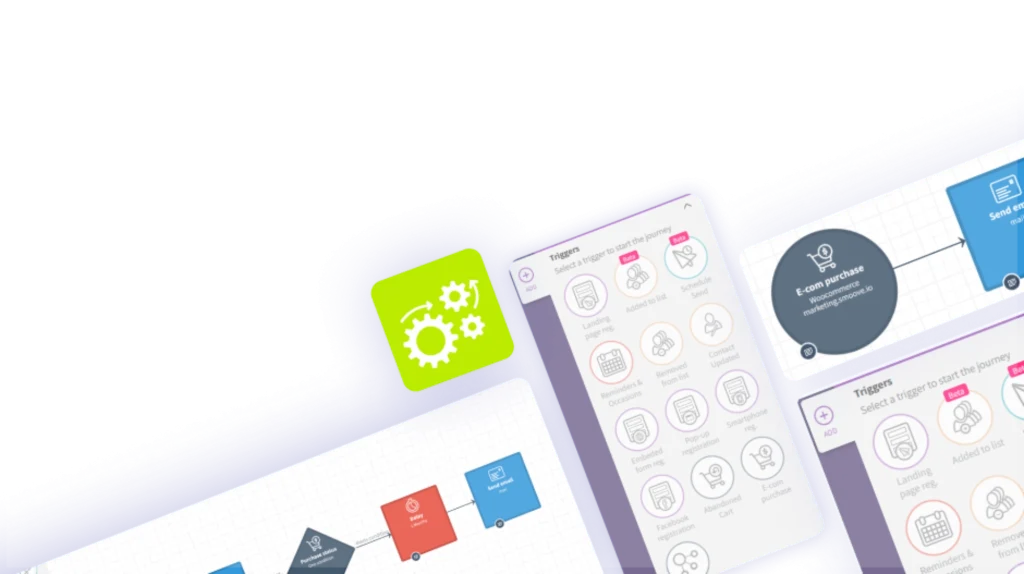
Drag and drop triggers, actions, and logic conditions onto your canvas, and guide your customer journeys in real time. Use ready-made templates for a wide range of use cases and goals, refine your content and messaging with AI tools – and launch your automation.
From that moment on, every action your customer takes triggers an immediate, personalized response within the flow.

Unlimited possibilities for collecting and managing your data with automation

Integrations and omnichannel communication

Drag and drop triggers, actions, and logic conditions onto your canvas, and guide your customer journeys in real time. Use ready-made templates for a wide range of use cases and goals, refine your content and messaging with AI tools – and launch your automation.
From that moment on, every action your customer takes triggers an immediate, personalized response within the flow.

Personalized marketing (Personalization) and audience segmentation within automation

Content personalization and targeting

Create automated flows with highly targeted messaging, based on segmentation and customer behavior. Each contact sees only the content that’s relevant to them, tailored to their personal attributes, ensuring maximum value at every touchpoint.

Improve performance and drive action in real time with marketing automation

Data analysis and journey optimization

Track data and performance metrics in real time, schedule messages for optimal timing, and run A/B tests to improve conversion rates. Understand how customers behave throughout the journey, and continuously optimize your flows based on real performance data. Our tools help  you identify what works best – and drive action with precision.

דמות מצביעה על כניסה לקורס

Frequently asked questions about Marketing Automation

Marketing automation is a technology that enables you to manage automated communication processes with customers based on their behavior. It allows you to send the right message at the right time, without manual intervention, improving overall business efficiency.


Automation helps you stay in continuous contact with your customers and manage operational processes without manual work at every step. It saves time, enables real-time responses to customer actions, and improves the efficiency of your marketing efforts.

No. smoove is built with a simple visual workflow builder. You can create processes by dragging and dropping elements onto the canvas, making it easy for any business owner to build marketing funnels without coding.

Yes. smoove offers a variety of templates for common use cases such as welcome series, reminders, customer service flows, event management, sales, lead nurturing, and more. You can choose a template and easily adapt it to your business needs.

You can perform a wide range of actions, including sending messages across channels (email, SMS, WhatsApp), updating contact data, moving customers between lists, sending notifications, issuing dynamic coupons, connecting to external systems and CRMs, and more. Automation manages the entire customer journey end-to-end.

An automation flow can start based on customer actions such as form submissions, email opens, purchases or cart abandonment, WhatsApp interactions, status updates, or changes in contact data. You can also trigger flows based on timing or predefined conditions.

Yes. smoove supports omnichannel marketing. You can combine email, SMS, WhatsApp, integrations with external systems, and additional actions within the same flow – creating a seamless communication experience across channels.

Yes. smoove allows you to define conditions and data points to deliver different messages to different audiences. This ensures each customer receives relevant, personalized communication.

I don’t think I could run my business without automations. Tasks that used to feel overwhelming are no longer an issue. I can focus on growing my business or on my personal life, my family, and my kids. During the pandemic, we traveled through Central America for eight months, and my business kept running seamlessly.”

Ora Ariel
“The Optimist” - Courses, Trainings, and Lectures on Investments and Finance

Learn More About Marketing Automation

Marketing Funnel: How to Boost Your Business’s Marketing Performance

In today’s competitive business world, business owners and marketers are constantly searching for effective ways to enhance their marketing performance and increase sales. One of the most powerful tools at their disposal is the marketing funnel, a strategic roadmap that guides and focuses marketing efforts. What are its advantages, how does it work, and how can you create a successful funnel? Here’s everything you need to know.

What is a Marketing Funnel?

A marketing funnel is a model that describes the journey a potential customer goes through from the first exposure to a product or service until they take a desired action, typically making a purchase.

The term “funnel” serves as a visual analogy: the wide top represents the large target audience at the beginning of the process, and the narrower bottom symbolizes those customers who eventually take the desired action. The marketing funnel consists of several stages, with each stage requiring different marketing actions to move the customer forward. A deep understanding of the marketing funnel and effective strategies at each stage is the foundation for building a winning marketing process. The importance of the funnel lies in its ability to provide businesses with deep insights into customer behavior and identify strengths and weaknesses in the marketing process. By analyzing performance at each stage of the funnel, businesses can identify barriers, refine their marketing message, and tailor it to the specific needs of each target group.

The Top 5 Benefits of Using an Effective Marketing Funnel

Using a well-structured marketing funnel brings a host of important benefits to businesses. Here are the top five:

  1. Long-Term Revenue Growth: A well-designed marketing funnel enables businesses to build long-term relationships with customers. By providing value and personalization at every stage of the customer journey, businesses can cultivate customer loyalty and encourage repeat purchases.


  1. Saving Money and Time: A structured marketing funnel allows businesses to allocate their resources more wisely and efficiently. Understanding critical touchpoints and using effective strategies at each stage helps focus investment on the channels and tactics with the greatest impact.


  1. Opportunity to Reach New Customers: A well-planned marketing funnel attracts new customers and expands the business’s customer base. Through personalized strategies and compelling content, you can spark interest and turn prospects into actual customers. Additionally, nurturing a positive and consistent customer experience throughout the funnel encourages recommendations and referrals from existing customers, helping to increase the number of returning customers and significantly optimizing the process.


  1. Improved Customer Experience: A marketing funnel allows businesses to deliver a personalized and relevant experience to each customer. By understanding the unique needs and expectations of each customer, you can create focused and meaningful communication. Providing valuable content, addressing common questions, and solving customer challenges at every stage strengthens relationships and enhances satisfaction.


  1. Creating a Competitive Advantage: Using a marketing funnel allows businesses to differentiate themselves from competitors. By offering a unique experience, personalized messages, and value-added content, businesses can position themselves as experts in their field and build a strong brand. Such a competitive advantage attracts new customers, increases loyalty among existing customers, and enables businesses to charge higher prices for their products or services.

How Does a Marketing Funnel Work?

The marketing funnel is divided into different stages, each focusing on a specific task and defined marketing goals. The movement of potential customers down the funnel is influenced by marketing actions, with different strategies applied to drive them forward—from attracting attention and creating awareness in the initial stages to encouraging purchases and building loyalty in the more advanced stages. The success of a marketing funnel depends on the effective combination of various marketing methods, including content marketing, paid advertising, search engine optimization (SEO), social media marketing, and more. Additionally, the proper use of technological tools such as marketing automation or real-time behavior-based triggers can greatly enhance the effectiveness of the marketing funnel.

The 4 Main Stages

  1. Awareness: The first stage of the marketing funnel is creating awareness. The goal here is to reach as broad an audience as possible and introduce them to the brand, product, or service. Common methods at this stage include paid advertising, content marketing, public relations, and search engine optimization. The content at this stage should be general, informative, and easy to digest, aiming to capture the attention of a broad audience.


  1. Interest: After initial awareness is created, the next stage is generating interest. Here, the goal is to provide potential customers with more in-depth information about the value and benefits of the product or service. Educational content, tutorial videos, case studies, customer stories, and demonstrations are effective tools at this stage. The business should focus on solving the customer’s specific problems while highlighting the uniqueness and added value it offers.


  1. Decision: At the decision stage, potential customers are ready to consider making a purchase. The business needs to provide all the necessary information to help them make an informed decision, including detailed product specifications, service terms, customer reviews, FAQs, and return policies. Special offers, discounts, and free trials can provide additional incentives for action. At this stage, it’s important to address any potential objections and remove barriers to the customer’s purchase.


  1. Action: The final stage of the marketing funnel is the action itself—whether it’s making a purchase or another desired conversion. The goal here is to make the process as easy, convenient, and reliable as possible for the customer. An intuitive website design, a secure payment system, and excellent customer service are critical factors for success. After the purchase, it’s important to continue nurturing the relationship with the customer, providing support and encouraging repeat purchases and referrals.

Effective Tips for Creating a Successful Digital Marketing Funnel

To create a successful digital marketing funnel, focus on a few key areas for crafting customer-tailored content. First, it’s important to deeply understand your target audience—who your ideal customers are, what drives them, and what their specific challenges and needs are. Second, create diverse and high-quality content tailored to each stage of the marketing funnel. From informative blog posts and tutorial videos in the early stages to more detailed materials like guides and case studies in the later stages. Consistency in messaging and tone throughout the funnel is crucial, with adjustments made for different marketing channels. Additionally, incorporating clear and effective calls-to-action is critical to the success of the digital funnel. Calls-to-action should be specific, prominent, and persuasive, leading the customer to the desired conversion point. Through A/B testing and optimization, you can improve the performance of calls-to-action and increase conversion rates.

Conclusion

The marketing funnel is a powerful tool that allows businesses to maximize their marketing potential. By understanding the stages of the funnel, creating personalized content, and implementing data-driven strategies, businesses can attract new customers, enhance the customer experience, and increase revenue. In today’s competitive digital age, investing in a well-designed marketing funnel is essential for any business that wants to take itself a few steps forward and stand out in the marketplace.


Six Essential Automation Processes for Every E-commerce Website

Every e-commerce website, regardless of its niche, relies on three key components for success:

  1. Brand/Website Promotion: This is primarily achieved through search engine and social media campaigns, whether organic or paid.
  2. Retention Processes: These bring customers back for repeat purchases and address cart abandonment.
  3. Increasing the Average Shopping Cart Value: Encourage customers to buy more per visit.

Let’s break it down:

Component 1: This doesn’t need much explanation. If potential customers don’t know your website exists, they won’t visit or make purchases.

Component 2: This involves bringing back customers for repeat purchases or encouraging them to complete their purchases if they abandoned their cart. It’s significantly easier and cheaper to retain an existing customer familiar with your product or service than to acquire a new one.

Component 3: This aims to break the glass ceiling repeatedly. If the average customer buys one product per visit, the goal is to increase this to 1.5 products per visit.

In essence, you attract new customers (Component 1), bring back existing customers (Component 2), and increase their average cart value (Component 3). If your site accomplishes these three goals, it will continue to grow and sell.

So, how do you achieve this with an automation system like Smoove?

The Main Goal: Creating marketing automation processes and relationship marketing aims to replicate the real-world customer experience in the digital space. Initially, digital marketing was about reaching thousands of users efficiently, with exposure as the success metric. The new approach, however, is to give each user a personalized experience, making them feel as though they are receiving the same level of service as if they were in a physical store.

Why is this important? 

Because customer experience (CX) is now the primary factor determining whether a customer buys, returns for repeat purchases, or recommends your store.

To create effective retention processes and increase the average cart value, here are six automation ideas to integrate into your e-commerce site. Note that synchronizing your store with the automation system is crucial to track purchases accurately. This can be done using smoove’s e-commerce tools and, if necessary, external integrators like Zapier or Make.

Six Automation Processes to Integrate into Your E-commerce Site

1. “If You Liked X, You’ll Love Y” Process

If you have a variety of products, you can link related items. For example, if a customer buys pants, send an email suggesting a matching shirt with a direct link. The system will automatically pull product details for easy browsing.

2. “Buy X, Get Y” Process

Encourage customers to buy complementary or additional products. For example, offer a free hat or a discount on a second shirt when they buy one.

3. “Smart Cart Abandonment” Process

Understand why customers abandon their carts. Sometimes it’s not about the price but timing or a lack of understanding of the product’s value. Simply asking for feedback can provide insights, which you can act on to recover the sale.

4. “Recommend to a Friend After Positive Feedback” Process

After a purchase, send a satisfaction survey. If feedback is positive, ask the customer to recommend your store to friends.

5. “Happy Holidays and Birthday Wishes” Process

Many sites collect additional customer information, such as birth dates. Use this data to send personalized emails on holidays or birthdays, possibly with a discount to encourage purchases.

6.”We Want to Know You Better” Process

Collecting more information about your customers can help tailor products, services, and content to their needs. Use post-purchase emails to link to surveys, asking about their family status, location, and other relevant details.

Conclusion

While these six processes are highly recommended, each e-commerce site should choose the ones that best fit its product or service. Implementing all of these processes can significantly improve your results quickly. 

If you need help with automation, reach out to us – we’d be happy to assist.


How to Build an Automated Event Registration and Order Management Process: The Milk & Honey Story

What we love about automation is that it can be applied to various business areas and streamline processes for a wide range of needs.

Take, for example, Milk & Honey, the first whiskey distillery in Israel. They used our system to create a complex automated process that included event registration management, purchase approvals, and personalized product shipping based on each individual’s purchase, if any.

Their story began a few years ago when they decided to establish the distillery and launched a crowdfunding project to support it. The backers paid to make the dream a reality, knowing it would take several years before they saw the actual bottles. Recently, the long-awaited moment arrived when the backers received their rewards at the distillery’s launch event.

The Need

Milk & Honey needed to manage event registration and track attendance, including sending reminders. They also had to handle reward deliveries for their crowdfunding supporters, each with unique order and delivery preferences, all automatically.

The Challenge

Not all supporters pre-purchased bottles, and those who did had varying quantities, requiring personalized emails (segmentation). Supporters could choose delivery methods: home delivery, event pickup, or self-collection, needing precise coordination. Managing event registration and attendance confirmations was also crucial.

The Solution

The automation process included:

Initial Email: An invitation to the launch event and purchase details.

Customer Confirmation: Buttons for event attendance and delivery method choices.

Personalized Follow-Ups: Based on selections, processes were triggered:

  •   Attendees received event reminders.
  •   Self-collection customers chose pickup times via a landing page.
  •   Delivery customers filled out a detailed form.


Automation included confirmation emails, tracking responses, reminders for non-respondents, and event reminders.


Automation Benefits

Efficiency: Saved hours of manual work.

Accuracy: Reduced errors.

Improved Focus: Allowed the team to concentrate on production and event preparations.

Conclusion

Automation streamlines processes, saving time and effort, and lets you focus on crucial tasks. For upcoming events or product deliveries, let our system work for you.

Managing Digital Courses, Online Workshops, and Customers Club – All in One System

Meet Netta, the owner of Active Mode – Business Tools for Website developers.

As part of her business, she offers a variety of live and digital workshops on project management, conducts mastermind sessions for her club members, writes professional articles in her blog, and also manages the Facebook community of website developers.

Navigating the System: A Customer’s Journey

Netta’s journey with smoove can be described as a deep customer journey. Step by step, she discovers more tools in the system and incorporates them into the ongoing management of her business.

The initial ‘acquaintance’ came following the need to create distribution lists of workshop participants or new prospects, and she started with a basic subscription. From there, gradually, she continued to learn the tools, fell in love with the ability to extract statistics and data, and out of curiosity and self-investigation, she began working with automations as well.

After a period of work and with the natural development of the business, Netta understood that she also needed a platform for a digital course but postponed the task because she didn’t want to deal with development, building, and external integrations for smoove to synchronize data.

During one of her explorations in the system, she came across the course portal and realized that she found the solution she was looking for, and from there, the path to the first digital course was short.

Automations – A Marketing Channel That Signifies Significant Savings

Netta currently operates three main automation processes in her account:

  1. Automation for new club members – they receive a welcome email, a link to the portal with a username and password, and access to content. After a month, they also receive an email for scheduling an introductory call. At the same time, she receives a notification every time a new member joins the club.
  2. Automation for live workshop participants – they receive a registration confirmation email, reminders before the workshop, and a summary email after the workshop with an invitation to the club.
  3. Additional automation for purchasers of recorded workshops – including integration with the payment page.

And here’s how it looks in practice:

Live Workshops Automation

Customers Club Automation

Rerocrded Workshops Automation

We asked Netta for her recommendations for working with the system, According to Netta, following the work on the system, her thinking has developed into a place of “thinking of automation processes, and not just wanting to organize the chaos.”

In addition, she emphasizes that it is a significant saving in both time and money, thanks to the ability to automate processes she used to do manually. “Once I used to send emails manually, one by one, to each participant before and after each workshop, and then suddenly I discovered automation and realized how much it could save me.”

The beauty of the matter is that all this automated process also performs the marketing and conversion work for her: someone purchases a digital workshop, and later the automation invites them to the customers club, helping her turn a one-time customer into a recurring one, which is super significant for the business aspect.

Working with the Course Portal

Netta discovered the portal during one of the explorations in the system when she was looking for a platform to launch her first online course. At that moment, she realized, she has “an option for tremendous savings, both in money and in user management, all in one place with access to content.”

She launched the first course on the portal, even in its initial form, and she is very satisfied with both the outcome and the work on the interface itself.

As someone coming from the website building field, her course needs to meet high standards both in terms of content and in all aspects related to design and user experience she offers to her clients – who are also website developers.

Nettas Portal Login Screen

The Club Content Screen

A System That Encourages New Experiments

Netta does all the work on the system independently, and any feature she doesn’t know, she investigates thoroughly, and then tries to operate.

She defines the system as one that encourages intuitive learning and is very easy to operate, and of course, she relies on the tech support team for any question or complex problem she encounters.

Netta’s tips for working with smoove

so here are three valuable tips from someone who knows:

  • Don’t start working directly with automations; try sending emails first to understand what you want to say and at what stage, and after you understand that you have a recurring manual process, it will be much easier for you to turn it into an automated process. Create a manual customer journey that starts naturally, while working with the system, and only then turn it into an automation template. Once it happens naturally first, you’ll find it very enjoyable to turn it into a process because it will be very clear in your mind.

  • When building your course on the portal, emphasize a ‘clean’ user experience and give your users as clear content as possible – black on white. Use a white background in the portal design and add another color that matches your brand. Don’t overdo it. This way, you will maintain a professional and pleasant appearance.

  • Make use of the support team. The response is very quick and professional, and it’s a significant part of the system you are working with. Besides the fact that it allows me to trust the system, it also encourages one to experiment with as many tools as possible and not to be afraid to make mistakes because anyway, you have backup.

In conclusion

“I want you to add something else,” she asks, “my story shows that working on the system is suitable and efficient for all kinds of businesses, and you don’t have to be a huge organization with distribution lists of tens of thousands of users. My list may not be that big, and I currently only have a few hundred contacts, but I have a very good income from this project.”

The bottom line – even if you are a one-person or one-woman business, don’t be afraid to take advantage of all the tools the system offers you, try different options, use all the features simultaneously, and help your business grow automatically.

Good luck!

Feel free to open a free account in the system and try creating valuable content for your customers as well, by clicking on the link


How ‘The Optimistic’ Saves Significant Time in her business with Automated Processes

Like many others, Ora Ariel worked in the tech industry and felt trapped, but she had a plan. She became “The Optimistic,” providing courses and investment advice, primarily for beginners. We sat down with her to talk about how it all started and why she got special permission from smoove to develop several automations as she pleased.

When we first met Ora Ariel, she was frustrated with our tech support, “They blocked me from adding more automations. They said I exceeded the automation limit in my subscription. And I asked myself, ‘What does it mean to exceed the automation limit?'” She tells us with a half-smile. Yes, it turns out Ora loves automations even more than we do, as she was the only customer who managed to do so many automations until she reached the limit. “They thought I was trying to run bots or something, but no. Everything was active automations. Once tech support understood this, they specially opened up the permission for me.”

Tell us how it all started?

The short story is I worked in tech and didn’t like what I was doing, but leaving the tech industry is not easy without a plan. I looked for something that would allow me to leave, and then I discovered the world of investments. I realized that money could work for me, providing me with additional income until I decided what I wanted to do. I started reading, taking courses, and it struck me that as an intelligent person, I had no idea about my money and many other things. I started The Optimist’s website as a blog, thinking this knowledge should be passed on. From there, it grew, and people started asking me to speak at events or consult privately.

Part of the reason I named my business The Optimistic is to convey lightness and accessibility because I don’t look like a typical investment advisor, and I don’t want to be one. I want to show that young women can also invest and talk about it confidently. And I do this by personal example. I put a lot of emphasis on courses for women only because I noticed that in courses defined as general, almost only men register, but in the investment course for women, there is a lot of interest.

“I felt like I was investing too much effort behind the scenes until I almost gave up.”


When did you fall in love with automations?

Oh, I’m addicted to automations, really. Especially as a business of one woman. Initially, I just wrote on the blog and sent out newsletters every week with blog posts,” she explains, “but when the business started to grow, and I added webinars, it was so exhausting – sending reminders every time. Sometimes I made mistakes, like sending reminders on the wrong date. It prevented me from doing webinars eventually. I felt like I was investing too much effort behind the scenes until I almost gave up on webinars. From there, I realized I needed to refine it. That’s also one of the reasons I specifically switched to smoove because it has advanced automation features that other systems don’t have, and it can also be integrated with other systems.”

What types of automation do you have?

Website purchases management: My website’s course system is connected to smoove through the store, so when courses are purchased, customers automatically receive the email list and all the details.

Free course guidance: I have a free course that anyone can sign up for, and then they receive a series of emails and WhatsApp messages.

Webinar management: I have a system that I built with a professional to handle webinars. Today, it’s not a problem for me anymore; I just need to fill out a form for a few minutes, and that’s it. I only need to worry about the presentation of the lecture.

Leads management: If someone registers for a course or shows interest in something, it goes directly to the sales team, and they contact them.

“I don’t think I could manage my business without automations. Anything that was once a daunting task for me is no longer a task. I can focus on business development or my personal life, family, kids. During the pandemic, we traveled in Central America for eight months, and the business continued to operate.”

And you also have some less routine uses for automations

There are people who buy the course and don’t do it. It’s important to me that they complete the course. So I send reminders, feedback, and progress surveys. For me, it’s important to know that I did my best for them to do the course. It’s not just about taking their money; I want people to consume the content because I believe it’s a life-changing course; the impact of this course can be significant.

In conclusion

“I love investments. Today, I earn my salary in tech from investments and the business, and I work much less. I believe the knowledge I provide is important and can make a difference to people – for example, if they get fired, investments can save them. You don’t have to be rich to invest; on the contrary, especially when you suddenly receive a lump sum, it’s important to know that there are other things you can do with it besides wasting it.”

Ora Ariel is optimistic, and so are we, after getting to know her story in depth. It has everything that makes a good story – a small dream that becomes a promising and successful business, and one woman who comes to share her knowledge with the world. How great it is to see an independent business owner utilizing technological tools to automate her mission and saving valuable and significant time along the way.

Lead Nurturing is a crucial aspect of any successful business

Just like how well-groomed appearances catch our attention, leads who are nurtured properly are more likely to convert into paying customers. To maintain a high conversion rate between the number of referrals and the number of new customers each month, it’s important to take small but consistent actions that ensure the cultivation and nourishment of the ingredients that form the foundation of a thriving business.

You poured your blood, sweat, and tears into establishing your business. You invest in it day and night, always striving for professionalism. You even make sure to keep the water jug at the entrance refreshed and send price offers on stylishly branded paper. You could say that you do these small things to nurture your business, to give it the extra care it needs to thrive and succeed.

But in this complex process – and it certainly can be complex – there is one vital aspect we mustn’t overlook: lead nurturing. We’ve already discussed how to generate leads and maintain a satisfactory ROI, but now we need to focus on what comes next. How will we present ourselves in the best possible light to every person who has chosen to turn from an anonymous surfer to an identified potential customer and given us their details? This is where cultivating our business comes in.

Every journey begins with a single step

At the heart of every compelling story lies a fundamental rule of creative writing: there are two types of death. Either the protagonist embarks on a journey, which becomes the focal point of the plot, or the story begins with the hero’s return from a journey, with the plot focusing on their experiences. We can adapt this rule to shed light on the lead nurturing process


Each lead that comes your way sets out on a journey towards becoming a customer.
This journey involves several stages, starting with the introduction and information gathering, followed by content adjustment, and ultimately, the perfect conversion leading to a purchase. From the outset, it’s essential to plan the journey with careful consideration, defining the objectives you hope to achieve and the resources you’re willing to dedicate. Determine when each stage will end and when you can move on to the next phase. With a well-planned journey, you can guide leads towards becoming loyal customers.

First step: Gathering Information and Providing Value to Your Customers

The first step in lead nurturing is to gather information from the customer that will help you tailor your content and provide them with personal value. This involves collecting relevant data such as personal and family situation, age or date of birth, city of residence, and more. However, it’s important to keep in mind that at the initial stage, customers may not be willing to share a lot of information. To overcome this, it’s crucial to present questions in stages, while demonstrating to the customer how providing their details will benefit them. This approach not only helps you gather valuable data, but also makes the customer feel valued and understood.

Second step: “Effective Audience Segmentation for Personalized Communication”

 At this stage, we can use the information collected in the first stage to refine our target audiences based on interests or other relevant criteria. With the help of Samob’s system, you can easily pre-define mailing lists for each audience, saving you time and effort.

A personalized approach to communication allows you to identify and tailor your messaging to each customer’s unique needs and interests. For example, if a customer has purchased sports shoes, they may be interested in receiving content related to physical activity. Similarly, a customer who has bought yoga equipment may respond well to special offers on exercise mats.

You can also leverage personalization to build trust and empathy with your customers. By showing that you understand their needs and preferences, you can establish a deeper connection with them. For instance, you can offer birthday discounts or send reminders to customers who purchased a box of protein powder, letting them know it’s time to restock.

Ultimately, personalization is key to delivering a positive customer experience and driving conversions. By providing relevant and timely messaging, you can demonstrate the value of your products or services and build long-term loyalty with your audience.

Here are some examples of data that can be collected to provide personalized value across various fields of activity: 

  1. Parenting guides – Collect information on the ages of the children in order to send relevant information and tips on how to behave at home based on the child’s stage of development.

    2. Fashion chains – Determine whether to send equal offers and sales on women’s, men’s, or children’s clothing based on the customer’s preferences. In addition, identify the customer’s location and offer promotions or invitations to events in their relevant branch.

    3. Business consulting / digital marketing – Classify customers as self-employed, companies, solo business owners, or part of a department or organization, and determine their fields of activity in order to tailor value propositions and tips to their specific needs.

    4. Interior design – Identify if customers are renovating an existing home, building a new home, or are interested in design and home styling, and send them customer stories, planning tips, or inspiration based on their field of interest.

    5. Bed and Breakfasts / hotels – Determine if customers are interested in couple getaways, family vacations, or solo travel, and offer them tailored content that will market the accommodation according to their specific needs.

    6. Scuba diving equipment – Collect information on the type of diving the customer plans to do and recommend suitable equipment accordingly. Additionally, classify the audience by location and send relevant promotions for local diving spots.

    7. Cosmetics and care – Identify the age of the customer and send tips and suggestions for purchasing suitable products based on their skin type (anti-aging, acne, age spots, etc.).

    8. Travel advisors – Ask customers about their preferred style of travel (couple, family, solo) and whether they are interested in vacations, urban travel or adventure travel, and send them relevant offers and articles tailored to their interests.

Third step: level up

As previously mentioned, it’s crucial to establish the endpoint of our lead nurturing process. It’s important to note that the endpoint doesn’t necessarily have to be a purchase; it can also be a successful communication with the lead that prepares them for a sales call or providing them with a coupon or benefit, such as filling out a questionnaire and receiving the results via email. The endpoint should occur once we’ve exhausted all means of cultivating the lead from our end. This means providing them with the necessary information and engaging with them to the point where we feel it’s appropriate to take the next step.
To better understand how this process works in practice, we’ve provided an example of a basic automation process for lead nurturing. This process can be generated in the system and can significantly increase the likelihood of a purchase, using the example of a lead interested in yoga.

To effectively cultivate leads, it’s important to define the end goal of the journey. This could be a purchase or a different action that indicates a willingness to engage with the business. The end of the journey can also be marked by a coupon or benefit offered to the customer. It’s important to exhaust the lead from the business’s perspective before moving on to the next stage. 

To give an example, let’s look at a basic automation process for cultivating leads, based on a yoga business:

  1. Trigger: Joining the list. Relevant leads will automatically join and provide their details.
  2. Action: Send an email. A thank you email will be sent with interesting details about the business, valuable content, and a purchase offer.
  3. Action: Wait for three days before proceeding to the next step.
  4. Condition: Check the list status to see if a purchase has been made. Customers who purchase a product or service will be added to the list of purchasing customers.
  5. Action: Send another email with training tips, inspiration, and an offer to purchase yoga equipment to those who have not made a purchase.
  6. Action: Wait for three more days.
  7. Condition: Check the list status again to see if a purchase has been made.
  8. Action: Send another email with relevant content, such as an instructional video for home training, recommendations for training clothes, and a special discount for equipment.
  9. Action: Wait for three more days.
  10. Condition: Check the list status again to see if a purchase has been made.
  11. Condition: Check the email status to see if the customer has opened the email and showed interest.
  12. Action: Add interested customers who have not made a purchase to a separate list for future sales calls, surveys, or other personal customer journeys.

This process will increase the chances of a purchase and help businesses effectively cultivate leads.

In summary

Lead cultivation is a fundamental aspect of any successful business and a reliable way to provide personalized and relevant content to every lead while collecting valuable data that will improve your customer service. Our system offers several basic automation templates for lead cultivation. Feel free to experiment with them through our user-friendly interface and embark on a journey with your potential customers. It’s an exciting opportunity to expand your customer base and engage with your audience on a deeper level.